

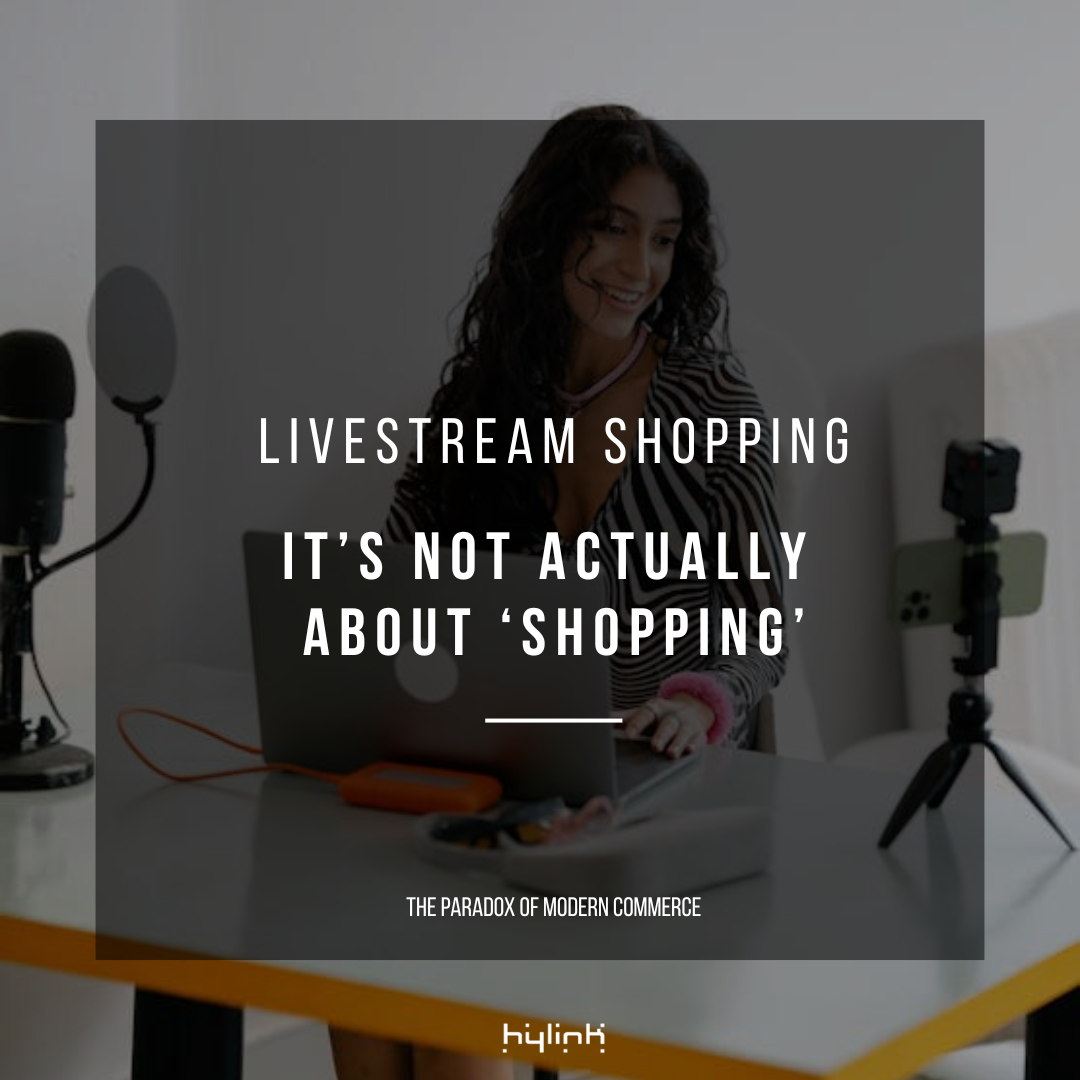
For decades, home shopping television wasn't just selling products; it was selling certainty. By providing a trusted human interface, it offered a psychological shortcut that bypassed the friction of decision-making.
Today, livestreaming has inherited this DNA and upgraded it for the digital-first era. It represents a fundamental shift from static e-commerce to a dynamic, "scenario-led" model where trust is built—and converted—in real time.
Livestream Shopping Sells the Moment, Not the Product
In traditional e-commerce, the product is the solo hero, often isolated in high-resolution galleries. In livestreaming, the product becomes a character within a narrative.
Whether a creator is cooking in a high-traffic kitchen or testing gear in a real-world environment, the product is shown in context. This transition from explanation to demonstration reduces the consumer's cognitive load. The decision to purchase feels instinctive because the utility is proven in motion, not just described in text.
Redefining Urgency: The Rise of Social Scarcity
While traditional retail relies on numerical scarcity or temporal scarcity, livestreaming introduces social scarcity.
Pressure is no longer generated solely by inventory levels, but by the visible, real-time engagement of a community. Watching others react, ask questions, and commit to a purchase creates a collective momentum. The value proposition shifts from "Buy now or miss the discount" to "Decide now or miss the cultural moment."
When Brand, Seller, and the Buyer Converge
Livestreaming creates a unique ecosystem where three distinct forces align to validate a purchase:
Brands provide the foundational equity and infrastructure. Creators lend their credibility and use their personal taste as a strategic filter for their audience. Buyers, through comments and questions, actively validate the purchase for others in real time. Control shifts from a single, polished brand narrative to live, conversational proof.
In this environment, personality becomes positioning. By reducing search effort and decision friction, livestreaming allows urgency to emerge organically through conversation rather than through forced marketing tactics.
From Commerce to Shoppertainment
Livestream shopping turns commerce into entertainment.
By blending emotional engagement with flash deals and interactive Q&A, brands can significantly increase "time on site". As viewing time increases, so does the likelihood of conversion. By combining entertainment, emotion, and trust momentum, livestream shopping creates an experience that traditional TV commercials struggle to replicate.